


How Neutral Host Networks Support Mobile Network Operators?
Key Takeaways: Rising Demand for Reliable Indoor Connectivity Reliable indoor coverage is now critical for mobile network operators, as users increasingly access mobile services in malls, offices, hotels, hospitals, and other high-traffic indoor spaces. Yet indoor connectivity can be difficult to deliver because of complex building layouts, growing data demand, signal-blocking materials, deployment costs, and […]

What Makes RF Planning Critical for In-Building DAS?
Key Takeaways: Overview: Why DAS Performance Starts Before Installation Modern buildings can create major challenges for trustworthy cellular connectivity. Complex layouts, concrete structures, high user density, and multiple network requirements can result in weak signals, interference, and coverage gaps. This makes proper planning necessary before deploying an in-building Distributed Antenna System (DAS). RF planning for […]

How Multi-Operator DAS Enhances Connectivity in Shopping Malls & Retail Spaces
Key Takeaways: The Hidden Connectivity Challenge Inside Retail Spaces Walk through a shopping mall and retail space, and you might notice a shopper unable to complete an online payment successfully, or phones losing signal near the parking lot.This isn’t a coincidence because malls are built with materials that block cellular signals. Unlike a single office […]

Indoor Mobile Coverage for Shopping malls & Retail: Solutions, Benefits & Deployment Guide
Key Takeaways: Understanding the Need for Seamless Indoor Connectivity in Shopping Malls & Retail Shopping malls have evolved into extremely connected environments where shoppers, employees, retailers, and smart systems depend on easy wireless communication. However, large floor areas, underground parking, dense construction materials, and high visitor volumes can create cellular dead zones and network congestion.In-building […]
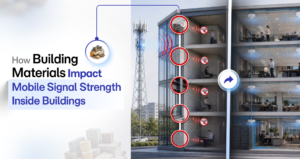
How Building Materials Impact Mobile Signal Strength Inside Buildings
Key Takeaways: Why Your Building Materials Matter for Mobile Connectivity Modern buildings are nothing short of marvels of engineering, designed to be structurally sound and highly energy efficient. However, the elements that make these buildings safe and environmentally friendly are the ones that give rise to hidden problems.The elements used in modern buildings serve as […]
Public Safety Communication for Modern Buildings: A Complete Guide to In-Building Coverage
Key Takeaways: Why First Responders Need Reliable In-Building Communication Seamless communication can save lives. We aren’t being dramatic, but when someone is seconds away during an emergency, modern buildings need instant communication tools.Here’s the problem: getting that reliable signal indoors isn’t a simple task. Modern building materials and layout are complex, which weakens radio signals and creates coverage gaps.For first responders, this can […]
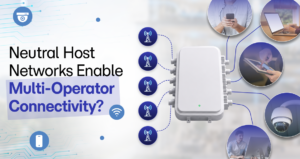
How Neutral Host Networks Enable Multi-Operator Connectivity?
Key Takeaways: Overview – Why Multi-Operator Indoor Connectivity Matters Indoor connectivity is crucial for buildings and public spaces. Yet, supporting users across several mobile networks can make indoor network coverage complex and infrastructure intensive.Neutral host networks address this challenge by allowing multiple MNOs to share a common wireless infrastructure. Rather than deploying separate systems for each […]
The Ultimate Guide to 5G Indoor Connectivity: Challenges, Solutions & Best Practices
Key Takeaways: Overview- Understanding the Need for Indoor 5G Connectivity As businesses embrace digital transformation, the need for fast, reliable, and uninterrupted indoor connectivity has never been greater. From hospitals and smart offices to airports, industrial facilities, and shopping malls, users expect seamless mobile experiences no matter where they are. However, while 5G promises high […]
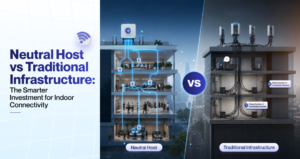
Neutral Host vs Traditional Infrastructure: The Smarter Investment for Indoor Connectivity
Key Takeaways: Rethinking Indoor Telecom Infrastructure for Modern Buildings Trustworthy indoor connectivity is essential for commercial properties, modern businesses, and smart buildings. As businesses adopt IoT, 5G, cloud applications, and digital-first operations, the need for streamlined indoor mobile coverage continues to grow. Traditional infrastructure often struggles to meet these rising demands. Deploying separate networks for […]
In-Building DAS Explained: A Complete Guide to Reliable Indoor Coverage
Key Takeaways: The Growing Challenge of Poor Indoor Mobile and Cellular Connectivity Say you’re attending an important video call or trying to make a payment, and suddenly your mobile signal decides to drop. Like anyone else, you move closer to the window or try to switch to airplane mode and back, hoping for a better […]
What Causes Dead Zones Inside Commercial Buildings and How to Fix Them?
Key Takeaways: The Growing Challenge of Indoor Dead Zones Reliable indoor cellular connectivity has become crucial for commercial buildings, where interrupted communications support business workflows, tenant satisfaction, and smart building technologies. Yet several hospitals, offices, hotels, shopping malls, and industrial facilities continue to experience frustrating cellular dead zones despite strong outdoor network coverage. Weak signal areas mostly […]
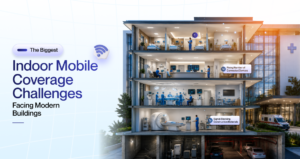
The Biggest Indoor Mobile Coverage Challenges Facing Modern Buildings
Key Takeaways: Why Indoor Connectivity Is Becoming Harder to Ignore You think the mobile coverage gap is a rural problem? Actually, the biggest mobile coverage challenge is in modern buildings. Malls, hospitals, or public-sector buildings record the highest usage of cellular devices. Studies show that most data usage and phone calls occur indoors.Indoor mobile coverage […]
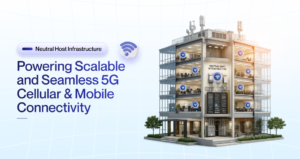
Neutral Host Infrastructure: Powering Scalable and Seamless 5G Cellular & Mobile Connectivity
Key Takeaways: Introduction- The Growing Need for Neutral Host Infrastructure in the 5G Era The speedy growth of consumption of mobile data and the worldwide rollout of 5G are revolutionizing the way businesses and users experience cellar and mobile connectivity. At present, reliable, high-speed networks are not an option anymore but are crucial for digital operations, real-time […]

Engineering DAS for High-Rise & Mixed-Use Buildings: Design Principles, Coverage Modelling & KPI Assurance
High-rise towers and mixed-use developments present unique RF challenges due to their height, density, material complexity, and multi-function zones. Designing a reliable in-building DAS requires advanced engineering methodologies, compliance with national regulations, and robust quality assurance.

DAS vs. Small Cells vs. Repeaters: Technology Selection Framework for Building Owners
Indoor wireless coverage can be delivered through multiple technologies—DAS, small cells, or repeaters. However, choosing the wrong technology often results in poor coverage, regulatory violations, or wasted investment.

Neutral Host In-Building Solutions: A Model for Multi-Operator, Multi-Technology Connectivity
The exponential growth of mobile data consumption, combined with evolving building typologies—high-rise towers, smart cities, mixed-use developments—has created unprecedented pressure on mobile operators to deliver reliable indoor coverage. Operators face escalating CAPEX demands, fragmented site acquisition processes, and complex building regulatory constraints.